Sinus Lift Procedure
Enhance Bone Density for Successful Dental Implants
When it comes to replacing absent upper back teeth with dental implants, adequate bone height is crucial.
Nevertheless, after losing a tooth, the bone in the upper jaw begins to shrink naturally — particularly around the sinus region. This is where a Sinus Lift (Sinus Augmentation) emerges as a reliable and effective remedy.
Curify Dental
Best Implant Dentistry in Delhi
As dental science evolves, dental implants have emerged as the most dependable and enduring option for replacing lost teeth.
If you're seeking proficient dental implants in South Delhi, our skilled implant experts offer secure, accurate, and extremely effective implant procedures customized to your preferences.
What Are the Maxillary Sinuses?
The maxillary sinuses are empty, air-filled cavities positioned on either side of your nose, just above the upper back teeth (molars and premolars). The roots of these teeth frequently lie in close proximity to the sinus floor.
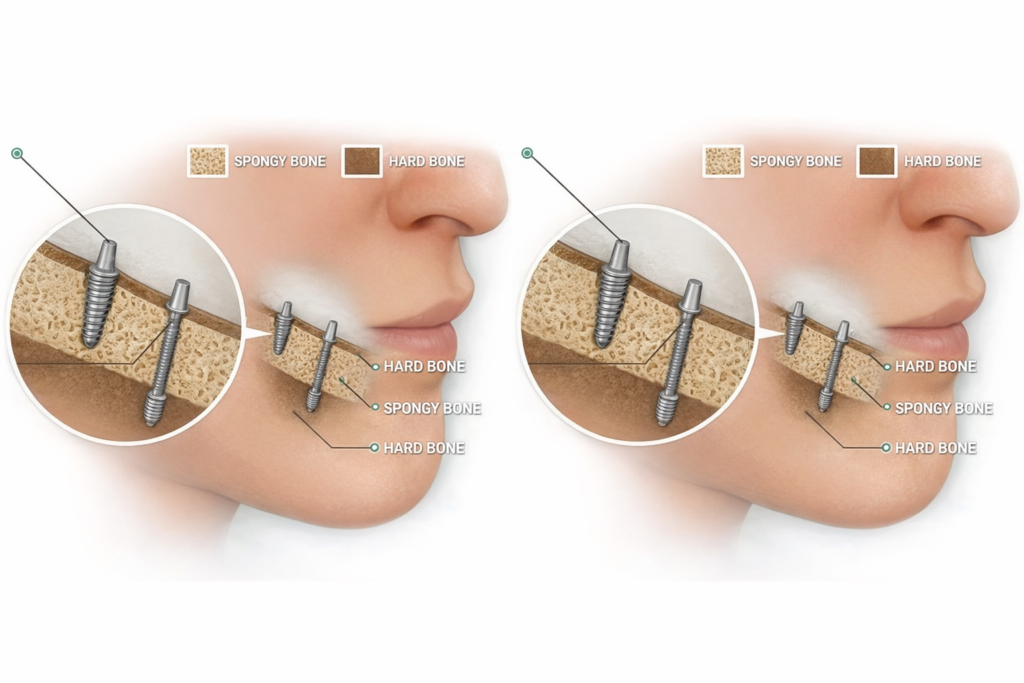
Following tooth removal, natural bone resorption takes place. Over time, the bone beneath the sinus becomes thinner, decreasing the height of available bone for the placement of dental implants. Without sufficient bone support, implants cannot be safely or effectively positioned.
What Is a Sinus Lift?
A Sinus Lift Procedure is a specialized treatment intended to enhance bone height in the upper jaw by gently elevating the sinus membrane and inserting bone graft material beneath it.
This process:
- Elevates the sinus floor
- Restores lost bone height
- Creates a sturdy foundation for dental implants
- Boosts long-term implant success
The procedure is also referred to as Sinus Augmentation and is commonly performed in the regions of upper molars and premolars.
DENTURE STABILISATION WITH DENTAL IMPLANTS
- Are you facing difficulty because of wearing loose denture
- Are you facing difficulty while sneezing or coughing because of your denture
- Do you finish meal very lately
- Are you placing gels to sore spots under the denture
- Do you need denture stabilisation with dental implants?
If your answer is yes of the above question , then you would be immensely beneficial from dental implants.
It has been commonly observed that mainly the lower denture moves since there is very less bone to hold it, due to resorption, as we lost. The solution for this kind of problem is to get implants to stabilise the dentures. You need at least 2-4 implants to stabilise the dentures. For the stabilisation of the denture, the attachment of the implants gets fixed on the inner side of the denture.
With the help of Implant, the Denture gets fixed, and hence Dentures will not slip or slide, thus enhancing the quality of life. You can now start enjoying your meals without any sore spots or ulcers and can eat anything you always wanted to!
SINGLE TOOTH IMPLANT
Single tooth implants serve as an excellent solution for the restoration of a solitary missing tooth. They are a remarkable advancement for those seeking to replace lost tooth/teeth, offering numerous advantages for patients who have recently experienced the loss of one or more teeth in various locations. With proper maintenance following the guidelines, dental implants can function effectively for over 15 years.

The premier choice for replacing a lost tooth is single tooth implant restoration, which consists of three components:
- The implant section: Inserted into the bone, acting as the root of a natural tooth.
- The abutment: Provides support for the crown.
- The crown: can either be cemented onto the abutment or secured with a screw..
Since the implant is constructed from biocompatible materials, it integrates well with the oral tissues in the mouth, ensuring there are no negative reactions within the oral cavity.
MULTIPLE TOOTH IMPLANT
When several teeth are absent in various regions of the mouth, one of the most efficient and dependable solutions is to substitute them with multiple single-tooth implants. This method replaces each lost tooth individually, offering a robust and stable foundation that closely resembles natural teeth.
Restoring several missing teeth is crucial not just for appearance but also for adequate chewing, articulation, and overall oral wellness. Initiating implant therapy without unwarranted delays helps avert additional bone depletion and preserves the integrity of your jaw.
Benefits of Multiple Dental Implants
- Each implant is positioned independently in the location of the absent tooth
- Implants operate without disrupting adjacent natural teeth
- Deliver robust support to neighboring and opposing teet
- Assist in preventing alveolar bone deterioration following tooth loss
- Sustain jawbone health in partially or fully toothless areas
- Provide a lasting, stable, and aesthetic solution
ABOUT ALL ON 4 TECHNIQUE
The newest advancements in the realm of dental implants focus on the all-on-4 method. The primary objective of this approach is to maintain the denture's stability using a minimal number of implants in the patient's mouth. As implied by its name, this technique necessitates four implants to uphold the complete denture, thereby requiring less bone.
Benefits of Multiple Dental Implants
- Avoidance of significant anatomical features by securing implants in the front area with superior bone quality
- Minimizes the likelihood of needing a bone graft by utilizing existing bone
- Complete arch final restoration achieved solely with four implants (eight implants for both arches)
- Feasible to have both permanent and detachable types of ultimate prostheses
- Immediate placement is feasible, shortening treatment duration and wait times
Implant Placement Accuracy
Precision is attained through the positioning of the implant via the All on 4 Guide. With the help of computer assisted guide the treatment procedure is speed with improved treatment results with higher patient satisfaction.